Washington Grown
The Heart of the South Sound
Season 13 Episode 1308 | 26m 46sVideo has Closed Captions
We explore Thurston County, where innovation and stewardship are shaping the future of farming.
Our team explores Thurston County, where innovation and stewardship are shaping the future of farming. At Urban Futures Farm, we meet growers bringing sustainable produce to Olympia, while the Thurston Conservation District shows how its Voluntary Stewardship Program helps protect local resources. We enjoy delicious stops at Phở Bắc Sup Shop and Woodinville Whiskey Co.
Problems playing video? | Closed Captioning Feedback
Problems playing video? | Closed Captioning Feedback
Washington Grown is a local public television program presented by KSPS PBS
Washington Grown
The Heart of the South Sound
Season 13 Episode 1308 | 26m 46sVideo has Closed Captions
Our team explores Thurston County, where innovation and stewardship are shaping the future of farming. At Urban Futures Farm, we meet growers bringing sustainable produce to Olympia, while the Thurston Conservation District shows how its Voluntary Stewardship Program helps protect local resources. We enjoy delicious stops at Phở Bắc Sup Shop and Woodinville Whiskey Co.
Problems playing video? | Closed Captioning Feedback
How to Watch Washington Grown
Washington Grown is available to stream on pbs.org and the free PBS App, available on iPhone, Apple TV, Android TV, Android smartphones, Amazon Fire TV, Amazon Fire Tablet, Roku, Samsung Smart TV, and Vizio.
Providing Support for PBS.org
Learn Moreabout PBS online sponsorship- "Washington Grown" is made possible by funding from the Washington State Department of Agriculture and the USDA Specialty Crop Block Grant program, and by the Potato Farmers of Washington.
Learn why Washington is home to the world's most productive potato fields and farmers by visiting potatoes.com.
- Hi, everyone.
I'm Kristi Gorenson and welcome to Washington Grown.
Big or small, rural or urban, we feature farms from every corner of agriculture.
In this episode, we're in Thurston County where farmers are growing nutrient dense food for their community.
I'm visiting Urban Futures Farm in Olympia.
- Almost everything is harvested the day that people pick it up, so you're never gonna find fresher food.
- And I'm making two special dishes at Pho Bac Sup Shop and The Boat in Seattle.
- You twirl like an Italian.
- Yeah.
[both laughing] Then Val and I are learning what makes Thurston County such a special place to be.
- Cheers to "Washington Grown".
- Cheers to "Washington Grown".
All this and more today on "Washington Grown".
[bright music] Cooking with Kristi.
Sweet Pete.
- Jiminy gee willikers.
[Kristi laughs] - Watch my bangs.
Go big or go home.
- Ah, right in my eye.
[laughing] You made me a believer.
Oh, I am making a mess.
- Oh, Val, I love you.
- Heaven on a plate.
That's yummy.
- We're gonna get a to-go cup for these.
- Yeah.
[group laughs] - You keep talking, I'll keep eating.
[bright music] If the dreary, overcast weather of Seattle has got you down, there's one place that has the cure.
Pho Bac Sup Shop is serving up the ultimate comfort food, pho.
Fresh, local ingredients and incredibly homey flavors make this place feel warm and cozy.
Perfect for every season.
- It's probably the best pho in Seattle.
- Flavor, 11 out of 10.
- It is so good.
- Pho is like the identity of Seattle in a lot of ways and it's kind of like what the immigrants brought in.
- Sisters, Quynh-Vy and Yenvy Pham, took over the restaurant from their parents, continuing the tradition of bringing Vietnamese pho to hungry customers in the city.
- It's kind of a gloomy city.
People want to eat something warm, something comforting.
You eat it and you feel so good, it's like good for the soul almost.
- I think the broth flavor is really well done.
- It's a good Sunday reset for me.
So it's like that's my go-to.
- Absolutely fire every time.
[laughs] - So many different sauces and vegetables and meat and proteins that you make it your own.
Like if I take a sip from your broth, it taste different from my broth after we like doctor it.
So that's what's fun about the soup, is you can really make it your own.
- Stay tuned for later in the show when Yenvy and I make pho and their sister dish, Vietnamese chicken and waffles.
- It's great for the skin.
- Yes, it's collagen.
- Collagen.
- That's how we stay young.
- That's...you're actually 65.
[both laughing] - How'd you know?
[bright music] - Over the seasons, I've seen farms of all shapes and sizes, but today I'm visiting a farm closer to the city.
At Urban Futures Farm in Olympia, the farming doesn't happen in a rural field, but in a neighborhood.
- The name, Urban Futures, reflects my vision of the world.
Our cities are getting more dense in Washington and we have more and more people coming in and that's good, but we need to have places for people to access fresh food in the cities too.
- TJ Johnson is the owner and primary farmer at Urban Futures Farm.
Before it was this lush field of produce, the land had a much simpler start as a community garden.
- We said, "Let's take a single piece of land and let's get a group of people that can work it communally and collectively, and let's see how much food we can produce in the most sustainable way possible."
So it was really a bit of an experiment.
We didn't know if it was gonna work.
- Oh boy, did that experiment work and it quickly became TJ's passion.
In 2015, he and his wife bought the land, turning it into the farm we see here today, with the goal of producing as much fresh food as possible for this community while maintaining carbon neutrality and sustainability.
- I'm a bit of a soil nerd, so it all starts with the soil.
So we test our soil every year and we apply just what we need to to get to the maximum fertility, and then we are choosing varieties to grow that are suited for this region, that are gonna work in our unique growing conditions here.
But because it all starts with the soil, then the food that comes out of that soil is very high quality, and so what my customers tell me is they notice the freshness, they notice the flavor, and almost everything is harvested the day that people pick it up so you're never gonna find fresher food.
We harvest in the morning, they pick it up in the afternoon.
- TJ and I took a stroll through the property showing me all that's done to keep this farm operating as cleanly and efficiently as possible.
- We plant things very densely, as you can see, because A, we have not a lot of land 'cause we're a small urban farm, but there's a lot of advantages of planting densely in terms of weed control.
If you create a canopy with your leaves, then less light is getting to the ground to grow weeds.
And we do a lot of companion planting too so we try to take advantage of beneficial relationships between plants.
So this is an example.
These are snap peas.
They worked very well with the cilantro.
The cilantro was low, these grow tall.
- Yeah.
- It brings in insects, it helps pollinate the pea flowers.
And we still have a couple of edible ones here.
- Yeah, that one looks like a good one.
- Yeah.
- The best.
- Everybody loves those, especially kids.
We can step into the high tunnel here.
Early in the season when it's still cool and wet here, we're able to grow greens, things like lettuce and spinach in here.
And then because we don't get as hot as like the east side, we can use it in the summertime to grow heat loving crops like these peppers and tomatillos and tomatoes and things like that.
- Wow.
Everything is just, it just looks so good.
- Oh, thank you.
- Yeah.
- And that's a general principle to my approach to farming, is diversity.
We grow over 60 varieties of vegetables on this farm, so lots of diversity.
And partially it's because not everything is gonna work every year, but diversity is how nature works.
And so we're trying to mimic nature with our systems here and diversity is part of doing that.
- Keep up the good work.
- Thank you.
- Yes.
- I'm gonna do it as long as my body holds out.
[both laughing] - I hear you.
[bright music] Thurston County in southwestern Washington is famously home to our state capital, but there's a whole lot more to explore when you get outside of the city.
- We're a large county of about 300,000 people.
- Wayne Fournier is a Thurston County commissioner.
Growing up right here made him appreciate the natural beauty of the farmland in this area.
- Visitors coming to this area are gonna find an authentic, real world kind of experience and you can get things that were grown and raised right here, next door.
Within Thurston County, we have the Bountiful Byway, which is a 60 mile stretch of highway where you can visit various different farms.
- We really do feel like this is such a special place.
- Jennifer Colvin is the owner of Colvin Ranch, another stop along the Thurston Bountiful Byway.
As a fifth generation rancher, Jennifer appreciates the history of this land.
- My great-great-grandfather came over on the Oregon Trail in 1849 and he basically went as far as he could go.
[both laughing] And so my family has been here ever since.
I was the fifth generation to grow up here, on the ranch, and we've been raising grass fed, grass finished cattle here for 171 years now.
- That's incredible.
Oh, and here they come.
Are they following us?
- Oh, yeah!
They're so curious.
- They saw the camera.
- They did.
They just wanted to come up and see what was going on.
- How's the grass?
- This is a fresh field for them, too.
We just moved them in yesterday.
- Oh, so they're very happy.
That's the best.
Our next stop along the Bountiful Byway was Sandstone Distillery, where owner, John Bourdon, lets us try the fruits of his labor.
- We are the first legal distillery in Thurston County since prohibition.
- Wow.
- So you are going to have some spirits made from grain that is grown 25 miles from right here.
So I'd like to start you off with a bit of our vodka.
[bright music] - Oh, that's yummy.
- Shouldn't taste like jet fuel.
- It's the water from this area.
- That reminds me of Olympia Beer, right?
- Yes.
- 'Cause it's the water and a whole lot more.
- That was the exact inspiration.
- Okay.
- See, I got a chance to go to the old brick brewery by joking around with these guys and then insulting them just a little bit, I ended up with the original recipe for Olympia Beer.
So what we did is we made the beer here and distilled that beer into a whiskey.
- Come for the booze, stay for the stories.
- For the stories.
[group laughs] - This is what my mom would drink at night if she had a cold.
- Mine prayed.
[laughs] - She would have a little bit of this.
[laughs] "Mine prayed."
Mine drank.
Well, thank you so much.
- My pleasure indeed.
- Cheers to "Washington Grown".
- Cheers to "Washington Grown".
Our last stop for today is Rutledge Family Farms with sunflower fields, pumpkin patches, and so much more, this is the perfect spot for a family day on the farm.
- We're in our third spot, but this is out of 50 locations on the Bountiful Byway that you can go to.
- I know.
- Wow!
- I love that.
- And there is something for everybody.
I think agritourism, that concept is important.
When you go there, you're supporting a local farm.
- Yeah.
Well, Val and I have a few more stops to make and a few fun things to do, but if you get the chance, check out Thurston's Bountiful Byway for all sorts of fun.
[bright music] - I'm a big fan of conservation districts.
They have helped me so much as a farmer.
How many conservation districts do you think there are in the state of Washington?
We'll let you know right after this break.
- Coming up, I'm making two special dishes at Pho Bac Sup Shop.
- It's great for the skin.
- Yes, it's collagen.
- Collagen.
- That's how we stay young.
- That's...you're actually 65.
[Yenvy laughs] Then Val's trying some special drinks at Woodinville Whiskey.
- That's just like all fireworks.
[bright music] - Conservation districts are a hidden treasure and they help farmers out so much.
So the question that we asked is how many are there in Washington State?
The answer is 45.
Almost every county has a conservation district and if you don't know about yours, you should.
Look into it.
- We're back in Seattle, at Pho Bac Sup Shop.
Delicious, homey flavors waft through the restaurant.
But go right next door, and you'll find their sister restaurant, The Boat.
- Where we're sitting in right now is the original Pho Bac.
- Okay.
- So this was open in 1981.
- '82.
- '82.
[both laughing] - Sisters, Quynh-Vy and Yenvy Pham, have continued the tradition of their parents, taking over the restaurant and expanding.
Today, they turned the original pho restaurant into a unique chicken and waffle concept.
But if you want pho, you just have to go next door.
- I think we're very fortunate that we're able to kind of just continue what our parents started.
They're very proud that it's still here and that we're still kind of doing the same food they did 40 years ago.
You know, we have two other sisters and they have different careers, right?
- Oh, they have real jobs.
They're doctors.
[both laughing] - Yeah, they got real jobs.
- Are your parents still involved?
- They're "consultants."
Yes.
- Now it's time to head to the kitchen with Yenvy to cook some pho.
- So we start with the broth.
So the broth takes about 24 hours to make.
- Okay.
And this is labor of love.
- Yeah, it's a labor of love and it doesn't stop cooking.
Yeah, so this is kind of like the holy grail of everything beef.
- Yes, it is.
[both laughing] - For a really good rice noodle, you only need about like 10 to 12 seconds.
That's why when you guys go to a pho shop, and be out within like five minutes.
- Yeah, "fast food."
- It is a fast food for sure.
- We are.
- I got you, I got you.
You twirl like an Italian.
- Yeah.
[both laughing] - I just kind of just pour it over.
Everything cooks because it's so hot.
- Yeah.
- And this is your bowl.
You wanna have a bite?
- I do.
- Okay.
[both laughing] - That broth is amazing.
- I'm glad you like it.
- It is really rich and delicious.
- It kinda hits all through your palette flavors.
You have sweet, salty, little acidic from the lime, umami.
- Where should I start?
I don't even know.
- Oh, you start with the tendon!
That's the most fun.
- Really?
I was sort of trying to avoid that one.
- No, I think you'll like it.
[Kristi laughs] I think you'll like it.
- Super flavorful.
- Yeah, it's very flavorful.
- It's great for the skin.
- Yes, it's collagen.
- Collagen.
- That's how we stay young.
- That's, you're actually 65.
[both laughing] - How'd you know?
- Now, we're going to make The Boat's specialty, Vietnamese waffles with caramelized bananas.
We start by cooking a banana in some caramel and then pour the waffle batter.
- So this is actually something that was invented in San Jose, California.
- Oh, okay.
- It's kind of like a mix of American banana foster with our American Vietnamese identity.
- Yeah, I love it.
[both laughing] - Yeah!
Oh, it's beautiful.
Perfect.
- Oh, yeah.
We put the bananas on some tapioca pudding and sprinkle on some peanut and sesame.
- This is gonna be a big messy bite for you.
- Okay, thank you.
- Hope you enjoy.
[bright music] - Oh, it's like really delicate.
- Mm.
- And rich.
But it's a fun messy.
Only you had a nice, clean bite.
- 'Cause I gave it the small one.
[Kristi laughs] - Delicate, sweet, little crunchy and salty.
- There you have it.
This is our waffle.
- Thank you so much.
- Of course.
- For more chef inspired recipes, visit us at wagrown.com.
[bright music] - Hey, everybody.
AnnaLu and I, we're here in Medical Lake, Washington, but we stumbled upon a very wonderful guest.
- I grew up in a small town in eastern Washington, right?
And when you grow up in a small town, there are two things that are vital, summer salads and casseroles.
- [laughs] Casseroles.
- That's what we all were raised on, right?
- Yes.
- My mom was the master of potato salad, macaroni salad, just those hearty salads, but this salad, inspired by her, is something quick.
- Today we're using fresh watermelon, peas, red onion, cilantro, and some salad dressing.
- First, we add peas to our diced watermelon and give it a stir.
- I like doing frozen peas, Tomás, because it's easy for this step.
- Then we add cilantro and red onion and give it another stir.
- That's already just vibrant and beautiful.
- Isn't that beautiful?
- Yeah.
- Then, we add our dressing.
- That's enough.
- Yeah.
[group laughs] - Is that what you were thinking?
- Yeah.
- Yeah.
And if that's the case, great.
Now, just mix it up.
- You've got a lot of options with this.
You could make it as is, add a little dressing in, and you could probably put whatever dressing you want that caters to your taste.
- Totally.
- You got blue cheese, avocado as options.
- Bon appétit.
- I love the fact that it's cold and fresh, and that watermelon is so sweet.
Mm-hmm, this is actually really, really good, Kara.
- Thank you!
- What was your mom's name?
- Carolyn.
- Okay, so this is Carolyn's watermelon pea salad.
- Awesome.
Thank you guys.
- Thank you, guys.
[laughs] - I'm so glad you guys could come.
- Me too.
- Enjoy.
- To learn how to make this recipe and many others, head on over to wagrown.com.
- Coming up, I'm learning how a conservation district is helping a local flower farm.
- We wanna see thriving ecosystems, we wanna see thriving ag economies because we need both of those to survive.
[bright music] - Sometimes a friendship is all you need for success, and there's no better proof of that than Woodinville Whiskey.
Best friends, Orlin Sorenson and Brett Carlisle, had one dream, making amazing whiskey using Washington ingredients.
Today, I'm taking a tour with Brett to see what goes behind the magic of one of my favorite libations.
- Val, these are our grain silos.
This is where we store our corn, our rye, and our malted barley.
Those are the three grains we use to make whiskey here at Woodinville.
As we know, the eastern half of the state is a lot of agriculture.
- Right.
- So for us to buy grains from another state didn't seem right to us.
- Yeah.
- We got in touch with a guy named Arnie Omlin out of Quincy, Washington.
So it was like a dream come true.
- Oh.
- That that got to happen.
So this is how we grind the grain down to a flour.
See how finely we grind it?
- Ooh, it's so light.
- We're trying to expose the starch in this grain and convert it into a simple sugar because that's what yeast consumes during fermentation to produce alcohol.
This big copper pot is filled with the fermented mash with about 9 to 10% alcohol by volume.
So it's like a strong beer going into distill.
So what we're trying to do is boil the alcohol vapor out, run it through this distillation column, and refine the alcohols and turn it into whiskey.
So this is where the alcohol will come spilling out, right here.
- Uh-huh.
[Val laughs] - Yeah.
I'm sorry we're not running today.
It gets put into brand new charred oak barrels for a minimum of five years and then it goes into a bottle.
You gotta have patience in this business and that's something I had to learn 'cause I'm not a patient person.
[both laughing] When you taste it, you let me know if it's worth it.
- I will let you know.
- Okay.
- Now Orlin is going to walk me through tasting some whiskey, starting with their six year aged bourbon.
- All of that color comes from the barrel char.
So you got 72% of this mash is corn, 22% rye, that gives it a little bit of a rye spice.
So the corn gives it the sweetness.
- I feel like I have a very underdeveloped tongue.
It's either good or not.
[laughs] - Well, you still got plenty of time to learn.
- All right, cool.
- This is our nine year bourbon - Hot diggity.
Here we go, y'all.
[bright music] I mean, that just makes me feel like, "Yummy."
- A lot of sweetness.
There's a tremendous amount of brown sugar.
You get a lot of flavor, and from that barrel.
- That's just like all fireworks.
This is very comforting.
- Yeah, very rich.
Almost like an after dinner apéritif.
- Yes.
[Val laughs] They have so many flavors to try.
So if and when you're in Woodinville, pop on into Woodinville Whiskey and see what all the magic is about.
[gentle music] - Every time you walk into the grocery store and see a giant bouquet of flowers, remember they came from a farm.
Today I'm visiting Delphi Flower Farm in Olympia where Sheila Cannon is sharing some of the beauty of her crops with me.
- We have the zinnias here.
- These are like one of my favorites.
- Have you heard of the wiggle test?
You know when they're ready to harvest when they don't wiggle like that.
- Really?
- So, if you were to harvest him, he would wilt within hours.
- It's like being in a candy store, kind of.
- Yes.
- You know, you're like, "Ah!"
- Exactly.
- Although the property is thriving with flowers now, when Sheila first moved in, it was in pretty rough shape.
- When I first bought it, it had been a a motocross track.
It was left abandoned and so of course, the first species to move in were Himalayan Blackberry and Scotch Broom.
- Invasive, yeah.
- Invasives.
- A lot of people, when they purchase property, they say, "What do I, what am I gonna do with this?
I need some help.
I need some resources."
- Sarah Moorehead is the executive director at the Thurston County Conservation District.
When they got the call from Sheila, they knew just what to do.
- Originally, our conversation started just around managing some invasive species.
- All it took was a phone call and they were extremely engaged and ready and willing to help right away.
- We've helped her with a farm conservation plan and sort of think about her whole entire farm as one cohesive landscape.
We've brought a lot of school groups out here to do plantings, to learn about wildlife, and learn about a working farm.
- One of the biggest projects they worked on together is this stream.
As water levels rise later in the season, this creek provides vital habitat for fish, all thanks to Sheila and her collaboration with the conservation district.
- There was a culvert that was blocking salmon runs from coming further up McLean Creek.
We replaced this whole bridge, took the culvert that was blocking out and it opened up almost two miles of salmon spawning habitat.
- That's awesome.
- We wanna see thriving ecosystems, we wanna see thriving ag economies, and how can we work on both of those together because we need both of those to survive and I think the Volunteer Stewardship Program is one of the things that takes a bite out of that.
- That's a program where land owners volunteer to basically steward the land for future generations.
- Yeah.
- So this is sort of a breath of fresh air opportunity for them to say, "Okay, what works for me?
What works for this specific piece of property?"
- They're not going to tell you what to do.
They're here to help, not to make or enforce rules.
- I think we wanna live on in perpetuity and sort of help every generation coming into the future to learn about their landscape, find their sense of place, and steward our shared resources.
We just wanna be around for the long haul to help people.
[gentle music] - When we think of Washington agriculture, our minds often go east to the wide, irrigated valleys beyond the cascades.
But some of the state's oldest farms took root much earlier, west of the mountains in places like Thurston, Island, and Lewis Counties.
Families began cultivating the land in the early 1850s.
Let's take a look back at the history of agriculture in Thurston County and see how it helped shape the future of farming in Washington.
[gentle music] The fertile plains and prairies of Thurston County lie on land long shaped by human hands.
Long before settlers arrived, indigenous peoples tended kamas, berries, and roots on the lowland prairies and gathered fish and shellfish along the sound.
When settlers reached the south sound in the mid 1800s, one of the first farms was established by George Bush and his family on Bush Prairie, near present day Tumwater.
George Bush was a free black pioneer, a frontier man, and a wheat farmer.
His 640 acre Bush Prairie Farm became a model of productivity, containing the region's first gristmill and sawmill.
Known for his generosity, Bush famously offered his grain to neighbors during hard times rather than sell it at inflated prices.
Despite legal challenges tied to racial laws of the time, a special act of Congress affirmed his claim in 1855.
His legacy endures through the farm's continuous operation and preservation as a historic agricultural landmark.
Along with Bush, other homesteaders, like Ignatius Colvin, came to Washington on the Oregon Trail in the 1850s for a fresh start.
The Colvin Ranch is one of the oldest ranches in the county still owned by the original family.
- My great-great-grandfather came over on the Oregon Trail in 1849, and he basically went as far as he could go.
[both laughing] And when he arrived here, he found grass as high as a horse's belly.
- Really?
- And this is where he stopped and he stayed.
So he homesteaded here, we say that the ranch was founded in 1854.
- Okay.
- That's when we have our first brand registration for the ranch.
And so my family has been here ever since.
I was the fifth generation to grow up here, on the ranch, and we've been raising grass fed, grass finished cattle here for 171 years now.
- By the late 1800s, farms in Thurston County were producing beef, grain, hay, dairy, and berries.
A milestone came in 1876 when Bush's son, William Owen Bush, won top international recognition for his grain at the Philadelphia Centennial Exposition Proof that Thurston Farms could compete with the world.
[gentle music] Today, Thurston's agricultural future is shaped by planning and conservation.
Zoning protections, conservation easements, and land use policies aimed at keeping farmland viable even as development pressures mount.
- Thurston County in general is this wonderful mix of urban and rural communities, and we're really on that convergence zone right now.
I think land conversion is one of the hottest issues in our area.
We are right along the I-5 corridor, right at the South End where a ton of urbanization is happening.
We have one of the fastest farmland conversion rates within our state, and our state in general has a high conversion rate for ag lands.
And so we have a lot of development pressure.
All of our assessed land values are highest and best use, which is residential building and so when a lot of folks are retiring from farming, that's their retirement and that's their opportunity to cash out.
And at the same time, we're losing so much critical, sensitive habitat.
We're losing these open spaces, our rural communities are losing character, and we're losing a ton of opportunity to produce fresh, healthy food for the urban communities right next door.
So it's super critical, especially for these spaces on the fringe, that we can preserve this and continue to keep it working and providing all of these great ecosystem functions.
- Yeah.
- Thurston County's farms tell a story of persistence, from the pioneers who broke prairie soil to today's stewards working to preserve it.
The effort continues, rooted in more than a century and a half of Washington's agricultural spirit.
- We are so lucky to live in a state where getting local food means you have a variety of high quality food to choose from.
That's it for this episode.
We'll see you next time.
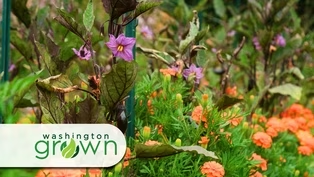
The Heart of the South Sound | Preview
Video has Closed Captions
Preview: S13 Ep1308 | 30s | We explore Thurston County, where innovation and stewardship are shaping the future of farming. (30s)
Providing Support for PBS.org
Learn Moreabout PBS online sponsorship
- Food
Christopher Kimball’s Milk Street Television
Transform home cooking with the editors of Christopher Kimball’s Milk Street Magazine.


Support for PBS provided by:
Washington Grown is a local public television program presented by KSPS PBS