
Northwest Profiles
From Behind the Lens
Clip: Season 40 Episode 1 | 7m 25sVideo has Closed Captions
Meet photographer, cinematographer, and media craftsman, Don Hamilton
For more than 40 years, Don Hamilton, who owns Hamilton Studios near downtown Spokane, has been part of the media landscape. A Photographer, Cinematographer, voice over artist, and now owner of an intimate music club. Join us as we take a look back on his amazing career.
Problems playing video? | Closed Captioning Feedback
Problems playing video? | Closed Captioning Feedback
Northwest Profiles is a local public television program presented by KSPS PBS
Funding for Northwest Profiles is provided by Idaho Central Credit Union, with additional funding from the Friends of KSPS.
Support provided by:

Northwest Profiles
From Behind the Lens
Clip: Season 40 Episode 1 | 7m 25sVideo has Closed Captions
For more than 40 years, Don Hamilton, who owns Hamilton Studios near downtown Spokane, has been part of the media landscape. A Photographer, Cinematographer, voice over artist, and now owner of an intimate music club. Join us as we take a look back on his amazing career.
Problems playing video? | Closed Captioning Feedback
Where to Watch Northwest Profiles
Northwest Profiles is available to stream on pbs.org and the PBS app.
Providing Support for PBS.org
Learn Moreabout PBS online sponsorshipYeah, this is definitely the place where you can be the big fish in the little pond.
The place is Spokane, and the big fish is Don Hamilton, a photographer, cinematographer, producer, director and action, and the owner of Hamilton Studios.
I was ready for a change.
I was working down at the South Coast Repertory Company.
Theater is my actual background.
He was the stage lighting designer and technical director, while also working as the theater's photographer on New Year's Eve 1979.
He decided to make the move.
I was tired of driving the LA freeways, and I came to Spokane to pursue the American Dream.
I started working as a still photographer in 1980.
I got to thank my mom.
She put a camera in my hand early on.
My dad had an Argus C-44, and that was my first 35 millimeter rangefinder camera, had a dark room in a bathroom at my home in Tarzana.
And I tell young people today you used to have to get your hands wet to make a photograph.
I don't know, I just sort of always loved it and been very lucky to make a living at it.
Some of my first work was done for publication called Spokane Magazine, and so I could remember doing editorial work for them, covers doing ads for the clients that they came up with.
And then I was originally thinking, maybe I was looking for a farm with a barn that I could turn into a studio.
But then the diocese had this white elephant.
This was originally built as the Saint Joseph School auditorium and gym.
It was just perfect space for us.
Big empty room, no posts in the middle of it, and we did quite a bit of work.
We moved in, we changed out the HVAC, new electrical system, blew in the sound insulation, built the cyclorama, and we've been using it as a photography studio and motion picture soundstage since 1985.
And it used to be we shot film.
These days it's all digital.
And of course, it used to be that if you wanted to market anything, you made a television commercial.
Everybody's excited, you're drumming, your drumming and there were three stations you could choose to put it on, you've got an ad in the Spokesman-Review and you got a radio spot on the air.
Of course, theres still television, as we know it, but there's also all this social media.
And so it's a completely different world.
Okay.
Camera a speed.
One on one, take seven.
But that basic storytelling process, the idea of a camera on a talking human being or a story being told with fictional characters.
For me, it is the same whether it's a vertical video on your phone or if it's a HD TV commercial that's on the big screen, it's still the same storytelling process.
I'm rolling.
Thank you.
I can remember for a good part of my life, I used to hang out the door of a helicopter with a film camera on my shoulder shooting stuff.
Now I got a couple of drones that do remarkable work and in a completely different manner.
The technology has evolved and continues to evolve.
Well.
It's exciting.
I mean, I'm very lucky to be playing this game at this time.
Here we go.
Rehearsal up.
And action.
I do like the idea, though, of actually directing a feature film, which is something I'm contemplating rather heavily right now.
I've worked on feature films as a director of photography, as a producer, and I would be delighted to take that next step.
In the 1990s, Spokane became the backdrop for the Hollywood film.
Benny and Joon and Don saw an opportunity.
The local media said that an L.A.
crew was coming up here to make a movie, and then were going to bring up Aidan Quinn and Mary Stuart Masterson and Johnny Depp, and they were going to cast a couple of local roles.
They were going to cast the video store owner and the UPS man.
And so I got myself a cardboard box and a clipboard, and 4000 people turned up for the auditions for those two roles.
And so I went to the front of that 4000 person line with my cardboard box and my clipboard, and I said, I'm looking for casting director Rick Montgomery.
So I went in there and I found Rick Montgomery, and I said, sign for the box.
And later on he opened it up and inside was my eight by ten and resume.
I need a check Benny C.O.D.
In a minute, meet me in the office It's a true story, and I still get residual checks every 90 days.
But the work hasn't kept Don close to home.
His photography has taken him across the country and around the world, sometimes to places few photographers ever get the chance to see.
I did work for an art exhibition called Son of Heaven, and I made four trips to China, and I had a studio inside the Forbidden City.
But it was built before Columbus sailed, and we photographed the objects for the catalog for that, and made documentaries to market and tell the story of that.
And that was an interesting time to be in China.
My last day in China was in 1989, four weeks before they cleared Tiananmen Square.
of all the students.
After decades of photography, filmmaking, and telling other people's stories, Don has found a new way to bring people together.
at his studio, with The Listening Room.
music It started out as an experiment, and I suppose it's still an experiment.
Like a bugaroo towards the swimming pool.
Listen to the Cowboys sing everybody jumping down to Palm Springs As I say, when we bought the place, we blew in the sound insulation and built a cyclorama for filmmaking, but never imagined it with an audience.
Maybe its highest and best use.
The acoustics in here are phenomenal.
The space is intimate, and so the audiences love it, the performers love it.
And so now we got to figure out how to keep it going.
It's a hoot.
music I don't know what Id do if I retired.
I mean, I enjoy what I do.
A lot of people retire and what do they do in retirement?
They take pictures and make movies, you know?
So I really do enjoy what we do.
I'm lucky to do it, and I want to keep doing it as long as I can.
 New
Video has Closed Captions
Clip: S40 Ep1 | 6m 51s | Watch Silverwood theme park transform into Scarywood—a world of haunted attractions and characters! (6m 51s)
 New
Video has Closed Captions
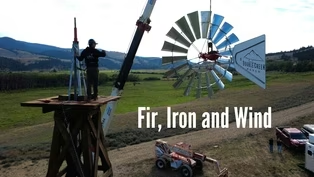
Clip: S40 Ep1 | 6m 29s | In Big Sky Country the craftsmanship of the past is being used to build machines for the present. (6m 29s)
Video has Closed Captions
Preview: S40 Ep1 | 30s | Photographer Don Hamilton, Montana Wind Power, Partners INW, and behind the screams of Scarywood. (30s)
 New
Video has Closed Captions
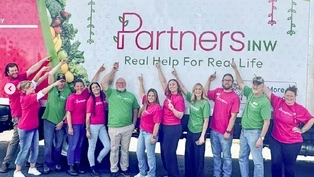
Clip: S40 Ep1 | 4m 19s | Discover how Partners INW is helping Spokane Valley families through the power of community. (4m 19s)
Providing Support for PBS.org
Learn Moreabout PBS online sponsorship










Support for PBS provided by:
Northwest Profiles is a local public television program presented by KSPS PBS
Funding for Northwest Profiles is provided by Idaho Central Credit Union, with additional funding from the Friends of KSPS.