
Northwest Profiles
Fir, Iron and Wind
Clip: Season 40 Episode 1 | 6m 29sVideo has Closed Captions
In Big Sky Country the craftsmanship of the past is being used to build machines for the present.
Take a trip with us to Big Sky Country and see for yourself. In the recreation of the solitary windmill, the era of these iconic wind machines didn't die out with the advent of electrical power. Instead, the craftsmanship of the past is being used to build machines for the present.
Problems playing video? | Closed Captioning Feedback
Problems playing video? | Closed Captioning Feedback
Northwest Profiles is a local public television program presented by KSPS PBS
Funding for Northwest Profiles is provided by Idaho Central Credit Union, with additional funding from the Friends of KSPS.
Support provided by:

Northwest Profiles
Fir, Iron and Wind
Clip: Season 40 Episode 1 | 6m 29sVideo has Closed Captions
Take a trip with us to Big Sky Country and see for yourself. In the recreation of the solitary windmill, the era of these iconic wind machines didn't die out with the advent of electrical power. Instead, the craftsmanship of the past is being used to build machines for the present.
Problems playing video? | Closed Captioning Feedback
Where to Watch Northwest Profiles
Northwest Profiles is available to stream on pbs.org and the PBS app.
Providing Support for PBS.org
Learn Moreabout PBS online sponsorshipYou truly don't understand the size and the scale until you're sitting here under one... or half of one.
Rising above the landscape.
These simple ye ingenious machines once dotted the American West.
Turning steadily in the wind, they brought life from deep beneath the earth.
Providing water for homesteads, ranches, railroads, and entire communities.
More than a century later, the windmill remains one of the most recognizable symbols of the frontier.
And in Victor, Montana.
One family is making sure that symbol keeps turning.
Founded by Jess Nelson and his wife Anna in 2019.
Big Sky windmills helps carr on the legacy of these machines by building and restoring these pieces of history.
Today, Annas son Connor helps carry the business forward.
>>Connor is my partner in this.
And we wouldn't hav accomplished what we have today without working together as a team.
He's I don't think I could replace him.
We accomplish things with the two of us that most crews with 3 or people don't get more work done.
Connor and I are kind of prou to say we're just windmillers.
>>The history of American windmills stretches back more than 170 years.
In 1854, inventor Daniel Halladay developed the Halladay Standard windmill, a self-regulating design whose blades folded inward during strong winds.
Just over a decade later.
Presbyterian missionary Leonard Wheeler designed a rigid wooden wheel and a hinged side vane to regulate itself in changing winds.
The windmill was called the eclipse.
>>Everything was wood.
If you go back far enough, the towers, the wheels, even the axles and some of the bearings, if you really go back, we're all made of wood.
>>The eclipse became one of the most successful water pumpin windmills of the 19th century, helping supply water across the growing frontier.
Capturing the wind was one thing, but using it to convert the spinning motion into an up and down stroke was the key to pumping water from underground.
>>You have to have some type of a gear system to turn that rotational energy into either a pumping motion or to turn a gear that would turn a belt to create power.
>>In about the mid 1850s, they took that rotational motion with a set of gears and turned it into an up and down stroke to drive a simple mechanical pump.
That design really hasn't changed.
Here' the inside of a modern gearbox.
The basic concept of the pump hasn't changed, but the quality and build has.
>>Heres the wind turning the wheel.
And the big bull gears are turning on these two little pinions attached to the main shaft.
Driving this yoke up and down.
So there's an example of the rotational motion being turned in up and down motion.
Because there wasn't a submersible electric pump, you either pumped it by hand or you had a windmill.
And if you've ever pumped much water by hand, it's okay if you're trying to drink, bu not if you're watering 50 cows.
>>Across the West.
Windmills made ranching and railroading possible.
>>A lot of these windmills out there.
The big ones pumped water for the steam locomotives, and that one is from 14ft and down, were for the farm and ranch guys.
You'll see a movie set right after the Civil War with the metal wheel in the background.
That's really wrong.
>>Production companies seeking historical accuracy began asking for authentic wooden windmills, that led Big Sky Windmills to create what they call the Eclipse Hybrid.
>>The eclipse wood patent windmill was in about 1867, and we've mounted all that to a modern design gearbox.
>>Building a windmill is one thing.
Raising it is another.
>>So you go out in the mornin and you're building the 12 or 14 or 16ft wheel, and if the wind gusts 10 or 15 miles an hour, it's trying to jump around on you.
So you're praying all morning that the wind isn't too bad while you're on the ground putting it together.
Then you get serious about the praying when it's time to fly that windmill up on top of the tower, because then you have no control over it when it's on the crane, to the point where at 20 miles an hour, you better just wait for another day.
>>On the Nelson property near Helmville, Montana.
A showcase of their craf is being placed on support pads while the crew goes about their business raising the heavy Douglas fir tower into place.
While Jess and Connor attach the 12ft wind engine, they make sure to pay attention to the weather, hoping it cooperates as they do their task.
>>That windmill will make about six gallons a minute without any modern electricity or anything.
On these windmills, it all goes back to a reason and a need.
>>Today that need still exists.
The myriad of projects overseen by Jess are many.
From the building of two towers that support 20ft Samson windmills on the Laz Bee Ranch near Duncan, Arizona, the childhood home of forme Supreme Court Justice Sandra Day O'Connor, to multiple project for landowners across the U.S.. The need and desire are there and a testament to the craftsmanship of this family business.
From the woode eclipse windmills of the 1860s to the towering windmills still pumping water today.
These machines helped build the American West and are still turning in the wind.
>>The windmills are like the cowboy and the Winchester rifle and the Colt revolver.
They're a symbol of this country, and there's just something magic about them I'm a windmill nerd.
I, I love them.
♪
 New
Video has Closed Captions
Clip: S40 Ep1 | 6m 51s | Watch Silverwood theme park transform into Scarywood—a world of haunted attractions and characters! (6m 51s)
 New
Video has Closed Captions
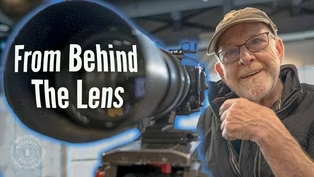
Clip: S40 Ep1 | 7m 25s | Meet photographer, cinematographer, and media craftsman, Don Hamilton (7m 25s)
Video has Closed Captions
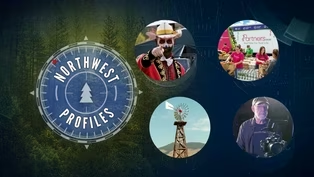
Preview: S40 Ep1 | 30s | Photographer Don Hamilton, Montana Wind Power, Partners INW, and behind the screams of Scarywood. (30s)
 New
Video has Closed Captions
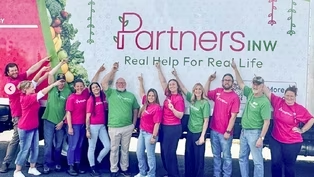
Clip: S40 Ep1 | 4m 19s | Discover how Partners INW is helping Spokane Valley families through the power of community. (4m 19s)
Providing Support for PBS.org
Learn Moreabout PBS online sponsorship










Support for PBS provided by:
Northwest Profiles is a local public television program presented by KSPS PBS
Funding for Northwest Profiles is provided by Idaho Central Credit Union, with additional funding from the Friends of KSPS.